
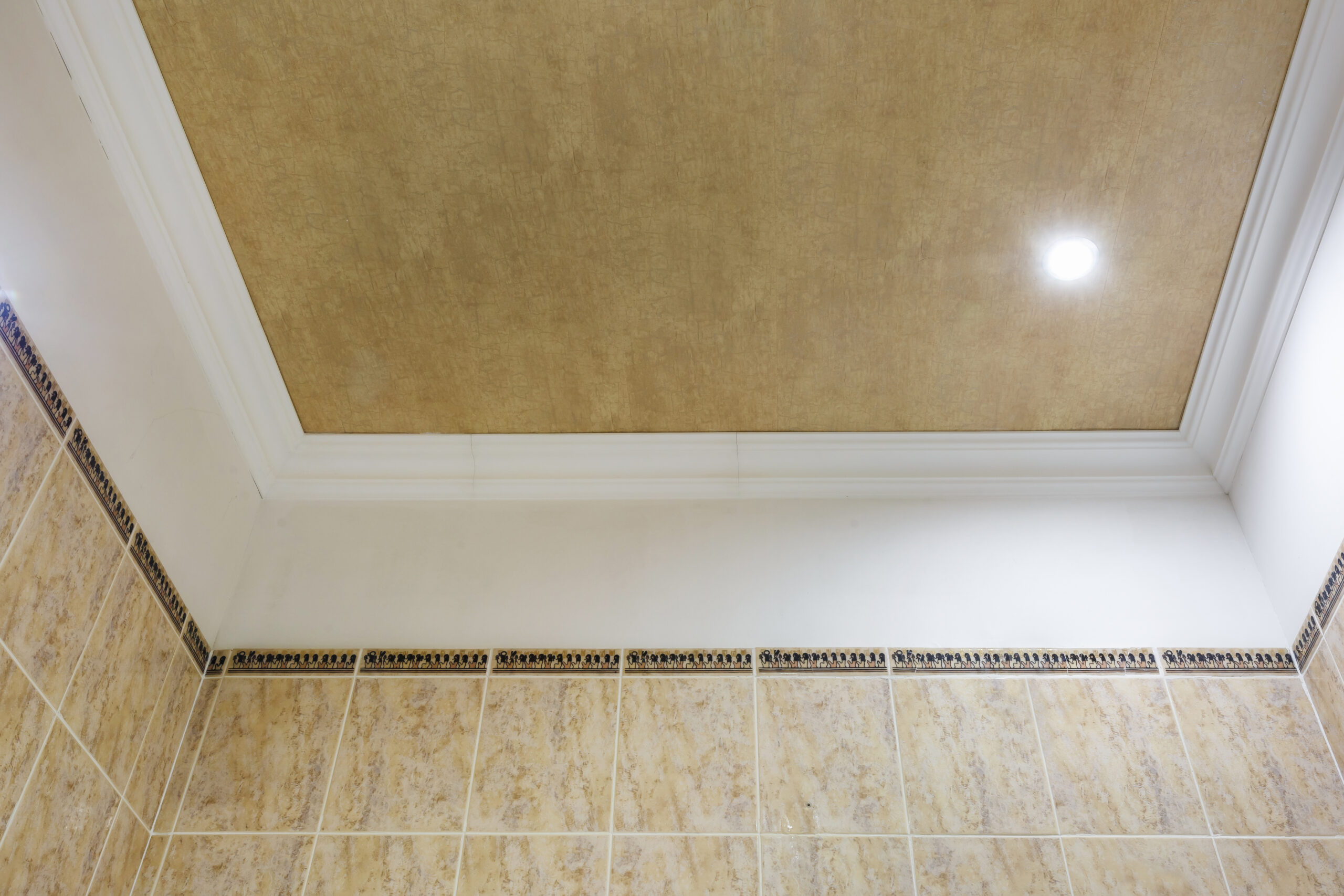
The bathroom ceiling is often an afterthought, yet it is arguably the most demanding surface in the entire home. Constantly exposed to steam, heat, and moisture, this surface requires specialized paint that can withstand humidity without peeling, discoloring, or encouraging mold growth. Choosing the right product ensures a fresh, clean look that lasts for years.
At Maple Crest Painting, we prioritize durability in high-moisture environments. Here is our expert advice for selecting and applying the best paint for your bathroom ceiling.
Why Bathroom Ceilings Need Special Paint
Standard interior paints simply aren’t formulated to handle the intense conditions of a bathroom environment. Specialty paints, often labeled as “kitchen and bath” formulas, offer critical protections.
Protects Against Moisture, Mold, and Peeling
High humidity creates the perfect breeding ground for mold and mildew spores. More importantly, the constant cycle of condensation (wetting) and evaporation (drying) can cause standard drywall and paint to fail.
- Fungicidal Additives: Quality bathroom ceiling paints contain mildewcides or fungicidal additives that actively inhibit the growth of mold spores on the surface of the paint film.
- Flexibility: These paints are formulated to be more flexible and durable, creating a tougher barrier that resists the moisture penetration that leads to peeling and blistering over time.
Prevents Discoloration from Humidity
Regular ceiling paint (which is typically a low-quality flat finish) is highly porous. When steam and hot air rise, moisture is trapped, and any contaminants in the air settle into the porous finish, leading to a dull, patchy, and often yellowed appearance over time.
Specialized paints contain a tighter molecular structure and a higher-quality binder, making the film less porous and better able to resist the absorption of moisture and contaminants.
Choosing the Right Paint Finish
The level of gloss in a paint determines its durability, cleanability, and moisture resistance. When painting a bathroom ceiling, your primary focus should be on creating a surface that is easy to wipe clean and sheds moisture.
Satin and Semi-Gloss for Easy Cleaning
For high-humidity areas like the bathroom, we strongly recommend stepping up the sheen from the typical flat finish.
- Semi-Gloss (Recommended for Ceilings): This is the most durable finish. It creates a hard, non-porous surface that is extremely resistant to moisture and can be vigorously scrubbed without damage. While the higher sheen will slightly highlight ceiling imperfections, the durability trade-off in a full bathroom is usually worth it.
- Satin: A great compromise. It offers better moisture resistance and cleanability than flat paint, but with a softer, more subtle sheen that helps hide minor flaws on the ceiling.
Avoid Flat Finishes in Humid Rooms
Flat paint is popular on standard ceilings because its lack of sheen hides drywall imperfections extremely well. However, in a bathroom, the cons outweigh this benefit:
- High Porosity: Flat paint’s rough texture is highly porous, meaning it traps moisture and dirt, making it susceptible to mold and impossible to truly clean.
- Low Durability: It lacks the resilience to withstand frequent cleaning or the constant moisture cycle, leading to quicker failure and peeling.
Color Ideas for Bathroom Ceilings
While white is traditional, the ceiling offers an opportunity to add subtle color and personality to your bathroom design.
White for Brightness and Simplicity
A bright, clean white is the timeless default. It reflects the maximum amount of light, making the bathroom feel larger, cleaner, and brighter.
- Our Suggestion: If your bathroom walls are colorful or dark, keeping the ceiling a crisp, pure white in a semi-gloss finish will provide a clean break and elevate the overall design.
Soft Blue or Cream for Relaxing Spaces
Color can dramatically influence the atmosphere of a bath or shower space.
- Soft Blue: A light, soft blue (think a pale sky or robin’s egg) can mimic the feeling of a clear sky overhead, promoting relaxation and a spa-like feel.
- Cream/Off-White: If your walls are a warm neutral (like greige or taupe), using a creamy off-white on the ceiling instead of a harsh pure white will maintain the warmth and sophistication of the room.
Bold Contrast for a Modern Look
“Color-drenching” or painting the ceiling a darker color than the walls is a growing design trend that adds sophistication and drama.
- Technique: Use a shade from the wall color’s palette but two or three shades darker. For example, pair light gray walls with a charcoal or slate ceiling.
- Effect: This technique visually lowers the ceiling, creating an incredibly cozy, enveloping, and modern space. It works especially well in powder rooms or smaller, formal bathrooms.
Maple Crest Painting Pro Tips
Proper preparation and execution are just as vital as the paint you choose to guarantee a long-lasting, mold-free ceiling.
Use Mildew-Resistant Primer
The foundation is everything. Never skip the priming step, especially when painting over old paint or fresh drywall.
- Primer Type: Use a high-quality primer specifically labeled as stain-blocking and mildew-resistant. This locks down any lingering stains (like water spots) and provides an extra layer of defense against future mold development.
- Sealing: Primer seals the surface of the drywall, ensuring the topcoat of specialty paint adheres properly and performs as intended.
Keep Ventilation Running While Painting
Proper airflow is crucial both during and after the painting process.
- During Application: Keep the exhaust fan running throughout the painting process to manage fumes and help the paint dry more quickly and evenly.
- Curing: Continue running the fan for several hours after you are finished and avoid taking hot, steamy showers for at least 24 to 48 hours. Paint needs time to cure and form its final hard film—introducing high humidity too soon can compromise its durability.
FAQs
Can you use regular ceiling paint in bathrooms?
While you can use it, we strongly advise against it. Regular ceiling paint is usually a low-quality, highly porous flat latex paint that offers virtually no protection against moisture and mold. It will likely show water stains, harbor mildew, and begin peeling much sooner than a dedicated kitchen and bath paint product.
How do I prevent bathroom ceiling paint from peeling?
Peeling is almost always caused by moisture penetrating the paint film and compromising the bond between the paint and the substrate (drywall). The best prevention strategy involves a three-pronged approach:
- Preparation: Use a high-quality, mold-resistant primer to ensure excellent adhesion.
- Product: Use a dedicated “kitchen and bath” paint with a higher sheen (satin or semi-gloss) that is formulated for moisture resistance.
- Ventilation: Always run the exhaust fan during and for at least 30 minutes after every bath or shower to actively remove moisture-laden air from the room. A humidity sensor fan is an excellent upgrade.
Don’t let steam ruin your beautiful new ceiling. We use only the best moisture-resistant products to ensure a pristine, durable finish in your bathroom.
Ready for a professional, durable finish? Contact Maple Crest Painting today for a detailed consultation and estimate!