
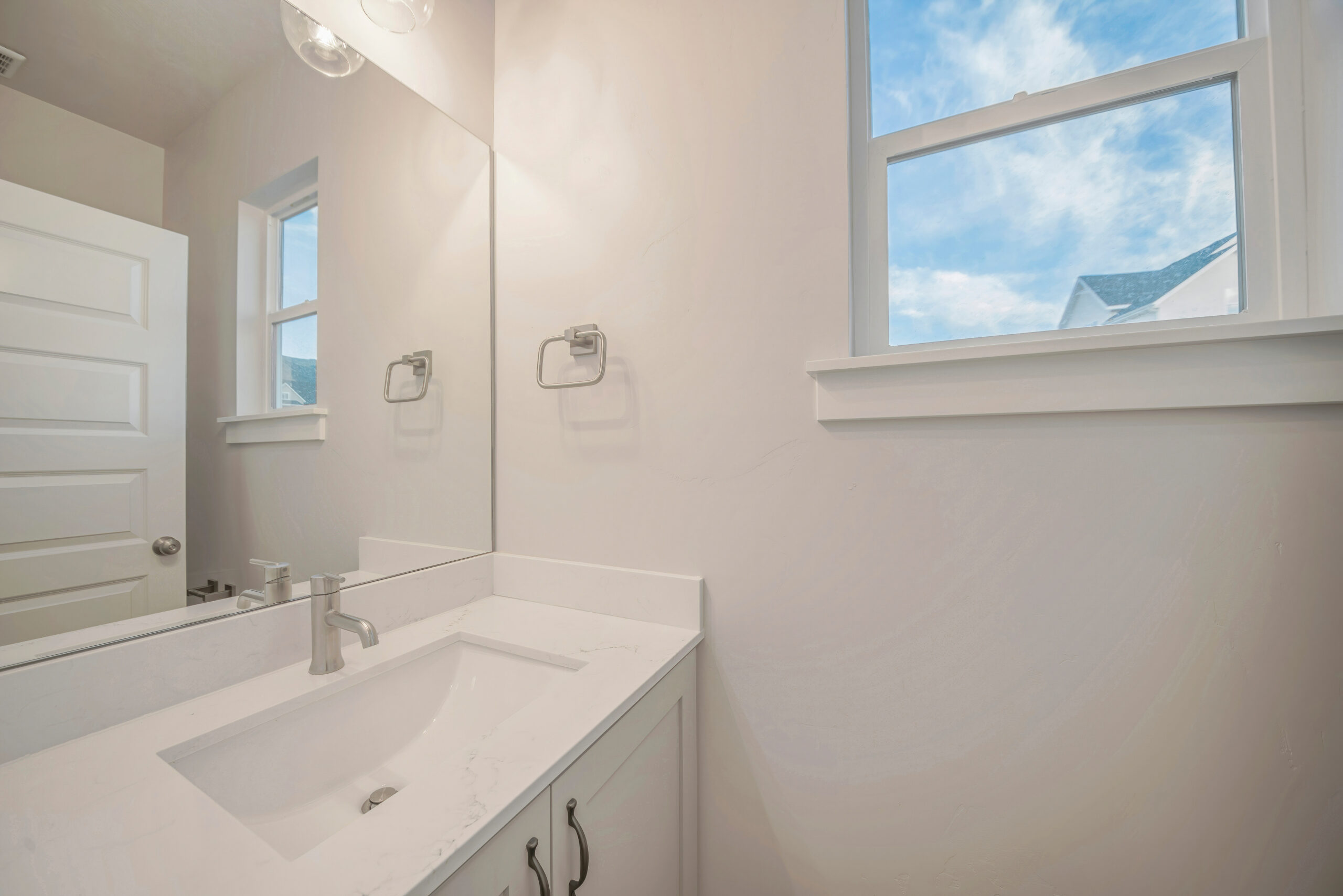
Small bathrooms, including powder rooms and guest baths, present a unique design challenge: how do you maximize the perception of space while injecting personality? The right paint color, applied correctly, is the single most effective tool for transforming a cramped space into a bright, airy, and inviting retreat.
At Maple Crest Painting, we specialize in high-moisture environments. This guide walks you through the best color choices and crucial application techniques for making your small bathroom feel spacious and staying durable against humidity.
How Color Affects Perception of Space
In architecture and interior design, color is a powerful visual tool that manipulates how a viewer perceives distance, height, and area.
Light Shades Open Up Tight Spaces
The fundamental rule for small rooms is to use light and cool-toned colors. Light shades recede visually, making the walls feel further away than they actually are. This psychological effect is often more impactful than trying to physically expand the room.
- Cool Undertones: Colors with blue, green, or violet undertones are generally perceived as cool. These receding colors are excellent for small spaces as they draw the eye outward, creating the illusion of distance.
- Monochromatic Schemes: Painting the walls and ceiling the same light color minimizes visual breaks, blurring the edges of the room and making the ceiling appear higher.
Glossy Finishes Reflect Light for a Brighter Look
Paint sheen plays as big a role as color. In a small bathroom, you want surfaces that bounce light around, maximizing both natural and artificial illumination.
- Semi-Gloss and Gloss: Finishes with a higher sheen (semi-gloss or high-gloss) are inherently more reflective than flat or matte options. This means light hitting the surface is scattered widely, enhancing the brightness of the entire room.
- Cleanliness: As a secondary benefit, these shinier finishes create a harder, non-porous surface that is easier to wipe down and maintain in a high-traffic, moist environment.
Popular Small Bathroom Colors
The best colors for small baths offer a clean foundation while creating a soothing, designer feel.
Soft Blues and Greens for a Spa-Like Feel
Muted blue and green shades are reminiscent of water and nature, lending an instant sense of tranquility and luxury—perfect for replicating a spa experience at home.
- Pale Aqua: A very light blue-green that is highly reflective and feels wonderfully clean. It pairs beautifully with white porcelain fixtures.
- Seafoam or Light Sage: These soft, grayish-greens provide color without overwhelming the space. They are grounding and complement natural wood vanities or woven baskets beautifully.
- Color Theory Advantage: These cool hues naturally recede, optically increasing the perceived size of the space.
Cream and Warm Whites for Classic Appeal
While a stark, true white can sometimes feel harsh or clinical, warm whites and creams offer a classic, gentle alternative that still maximizes light.
- Warm Whites: Whites with a hint of yellow or beige prevent the room from feeling sterile. This is ideal if your tile or flooring has warmer undertones (like travertine or wood-look vinyl).
- Cream: A deeper cream, sometimes referred to as ‘parchment,’ provides a richer look than pure white while remaining light-reflective. It pairs exquisitely with traditional fixtures and brass hardware.
Light Gray and Greige for Modern Bathrooms
For a sophisticated, modern, and versatile foundation, light grays and greige (a blend of gray and beige) are unmatched.
- Light Gray: Look for grays with a subtle blue or green undertone to keep them feeling cool and expansive. These shades work well with sleek, modern fixtures and chrome accents.
- Greige: This is the ultimate neutral. Because it balances warm and cool tones, greige is highly adaptable to both vintage and contemporary fixtures and works under varying lighting conditions without turning too blue or too yellow.
Tips for Choosing Paint in Moisture-Prone Areas
A bathroom requires a specialized paint formula to withstand the daily barrage of steam, humidity, and direct water exposure.
Use Mildew-Resistant Paints
Standard interior wall paint is not formulated to handle sustained moisture, which can lead to peeling, blistering, and the growth of mold and mildew.
- Specialized Formulas: Always select a paint specifically labeled as “Kitchen & Bath” paint. These formulas contain active mildewcides and fungicides to inhibit biological growth and feature enhanced resins for better adhesion and moisture resistance.
- Preparation: Proper wall preparation—including repairing any wall damage and using a dedicated moisture-blocking primer—is essential for the long-term integrity of the paint job.
Avoid Flat Finishes in High-Humidity Zones
Flat or matte paint surfaces are porous, meaning they absorb moisture and dirt easily.
- Porosity Problem: When a porous surface absorbs water vapor in a small, unventilated bathroom, it risks blistering and encourages mildew growth. It is also nearly impossible to scrub clean without damaging the finish.
- Sheen is Function: Prioritize finishes in the satin or semi-gloss range. These sheens create a tighter, more durable barrier against moisture, making them wipeable and significantly extending the lifespan of the finish.
Maple Crest Painting’s Expert Advice
Small spaces don’t have to be visually dull. Strategic use of color and finish can make the room appear larger and more curated.
Pair Neutral Walls with Colorful Accents
If you choose a conservative, light color for the walls (like warm white or light gray), use accents to provide depth and visual interest without closing in the space.
- Focus on Textiles: Introduce bold colors or patterns through easily changeable elements like towels, shower curtains, and bath mats.
- Art and Accessories: Use a single, vibrant piece of art or unique lighting fixtures to draw the eye, preventing the overall light color scheme from becoming monotonous.
Add Contrast with Darker Trim or Vanities
A common mistake is making a small room entirely one light color, which can sometimes make it feel indistinct. Adding a contrasting element grounds the space.
- Darker Vanities: Painting a freestanding vanity in a deep charcoal, navy, or even black provides necessary visual weight and contrast. Because the vanity is vertical and not a full wall, the dark color doesn’t shrink the room but rather defines the area.
- Trim Detail: Use the trim (baseboards, window casings) in a bright white if the wall is a color, or use a slightly darker greige trim if the wall is white. This subtle break adds architectural definition.
FAQs
What paint finish works best in small bathrooms?
Semi-Gloss is universally considered the best finish for small bathrooms. Its high durability and maximum moisture resistance are essential in such high-humidity environments. Semi-gloss is highly scrubbable, easy to clean, and its light-reflecting properties help to visually expand the room.
Do dark colors make small bathrooms look smaller?
Generally, yes—dark colors absorb light and make walls feel closer, which can optically shrink the room. However, you can use dark colors strategically to create dramatic effect without feeling suffocating.
- The Jewel Box Effect: Painting a small powder room a deep, rich color (like charcoal or eggplant) can create a sophisticated “jewel box” effect. This works best when the paint is paired with bright white trim and a reflective mirror to prevent the space from becoming completely devoid of light.
- Avoid Flat: If you do choose a dark color, always use a semi-gloss or high-gloss finish to ensure maximum light reflection and durability.
A successful small bathroom paint job is all about durable product selection and flawless application. Don’t let high humidity compromise your finish.
Ready to transform your cramped bathroom into an airy, stylish retreat? Contact Maple Crest Painting for a humidity-proof, professional painting service today!