
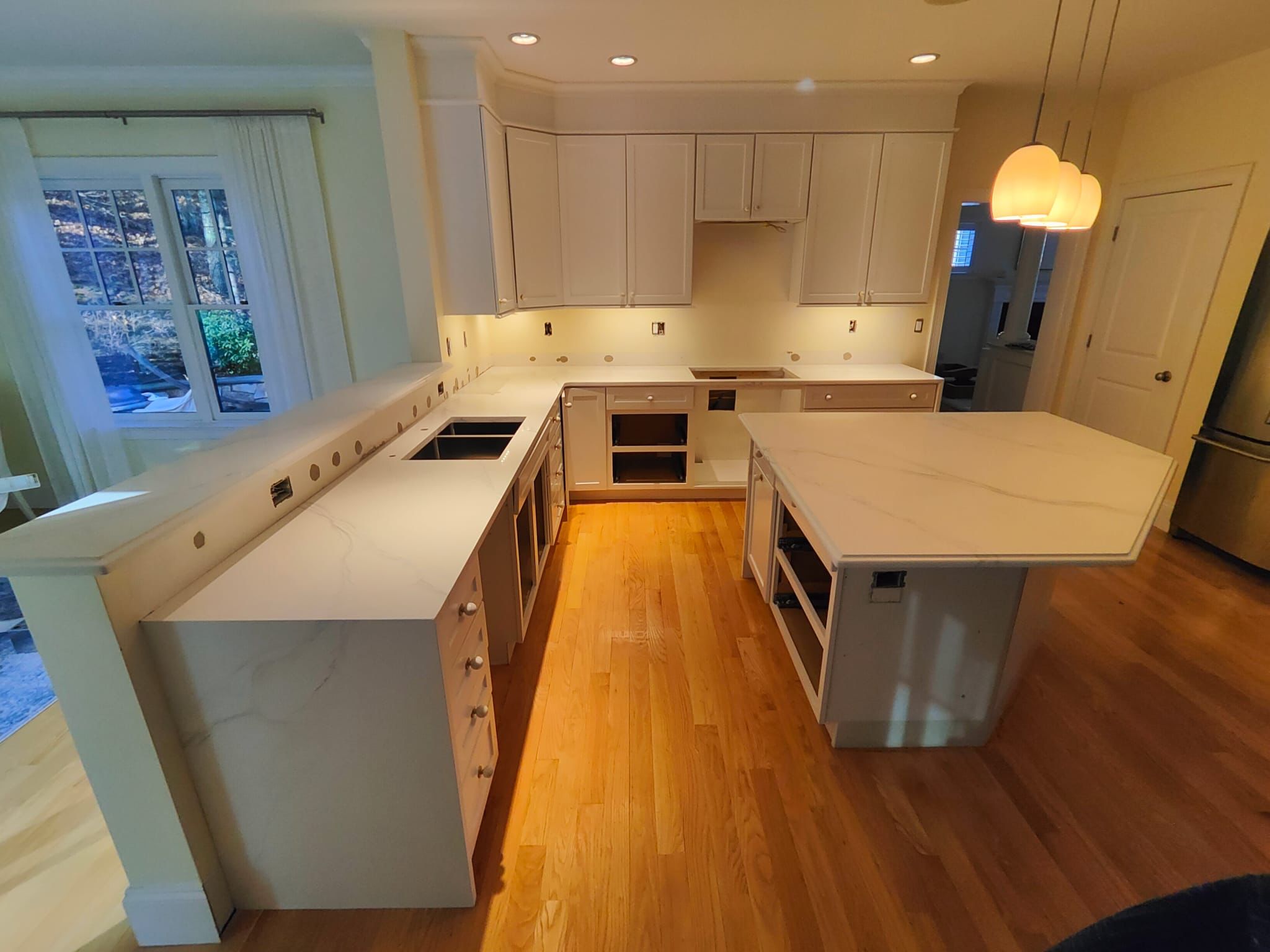
Refinishing your kitchen cabinets is a transformative project. A fresh coat of paint instantly modernizes the space, updates the design aesthetic, and costs significantly less than a full cabinet replacement. But how do you choose the color that will stand the test of time while feeling current?
The team at Maple Crest Painting stays ahead of design trends and application technology. Here is our essential guide to selecting the perfect, high-performance paint colors for your kitchen cabinets.
Why Cabinet Color Choice Matters
Cabinets dominate the visual space in any kitchen, often making up $\text{40\%}$ or more of the room’s visible surfaces. Their color choice is therefore critical to the overall success of the design.
Impacts Kitchen Brightness and Resale Value
The color you select directly influences the perceived size and light quality of your kitchen. Lighter colors (whites, creams, and pale grays) reflect light, making a small or dark kitchen feel open and airy.
Furthermore, a professionally painted, neutral kitchen adds significant resale value. Buyers appreciate a clean, move-in-ready aesthetic, and well-chosen, timeless cabinet colors—like warm white or greige—are highly appealing to the widest audience.
Creates Balance Between Walls and Countertops
Cabinets act as the crucial middle ground in the kitchen’s color hierarchy, needing to harmonize with both the horizontal surfaces (countertops and flooring) and the vertical surfaces (walls and backsplash).
- For high-contrast granite or marble: Use a neutral cabinet color (white or gray) to let the stone be the focal point.
- For neutral or solid countertops: Cabinets can become the main color feature, allowing you to use bold blues, greens, or even black.
Trending Cabinet Colors for 2025
The current trend leans toward sophistication, embracing colors that feel cozy and grounded while still being exceptionally clean and modern.
Warm White and Soft Greige for Airy Spaces
Pure, stark white has given way to warmer variations that prevent the space from feeling sterile or overly cold.
- Warm White: Whites with subtle yellow or beige undertones (often called “off-white” or “creamy white”) are dominating, providing brightness without harshness.
- Soft Greige: This popular shade is a mix of gray and beige. Greige works beautifully in almost any lighting condition and pairs effortlessly with both warm wood flooring and cool stainless steel appliances. It’s the current gold standard for timeless, airy spaces.
Navy Blue and Forest Green for Contrast
These deep, saturated colors are perfect for homeowners looking to make a statement while adding depth and personality.
- Navy Blue: A timeless classic that offers high contrast against white walls and brass or gold hardware. Navy reads as both traditional and modern, depending on the cabinet style.
- Forest Green: This earthy hue brings a sense of calm and nature into the home. It pairs stunningly with butcher block countertops or natural stone finishes and is especially striking in a semi-gloss finish.
Charcoal, Taupe, and Black for Modern Appeal
Dark cabinetry instantly creates drama and a sleek, contemporary feel.
- Charcoal and Taupe: These muted, smoky colors are sophisticated alternatives to stark black. They are often used in European-style kitchens and are excellent at hiding minor scuffs or smudges.
- Black: Used sparingly, perhaps on a kitchen island or a section of base cabinets, black can ground a bright room. When executed with a flawless, professional finish, black cabinets deliver an unparalleled level of high-end modern appeal.
Tips for Choosing the Right Shade
The right color on the swatch can look entirely different once it’s applied across an entire kitchen of cabinets. Here’s how to ensure your choice is the right one.
Consider Natural Light and Kitchen Size
- North-Facing Rooms: These rooms receive cool, blue-toned light all day. To counteract this, choose warm colors (whites with yellow undertones, warm greige, or rich browns) to keep the space from feeling chilly.
- South-Facing Rooms: These rooms receive bright, warm light. You can safely use cooler shades (grays, blues, or pure whites) without worrying about the room feeling too dark.
- Small Kitchens: Stick to reflective, light colors to maximize the feeling of space.
Match Hardware and Backsplash Tones
Your cabinet color should complement the fixed elements in the room, particularly the backsplash and the hardware finishes.
- Cool Tones: Grays, blues, and cool whites pair best with chrome, stainless steel, and cool-toned marble backsplashes.
- Warm Tones: Greige, warm whites, and greens pair best with brass, gold, bronze hardware, and creamy, textured backsplashes.
Maple Crest Painting’s Recommendations
A cabinet paint job requires specialized preparation, products, and equipment far beyond what is required for walls.
Durable Finishes Like Satin and Semi-Gloss
For cabinets, the choice of sheen is about more than just aesthetics; it’s about durability and cleanability.
- Satin: Provides a soft, refined appearance that works well in traditional kitchens. It offers good durability and is easy to wipe clean.
- Semi-Gloss: The most common professional choice. It reflects more light, making the color pop, and creates a harder, non-porous surface that is extremely resistant to chipping, grease, and moisture.
Importance of Professional Priming and Sealing
The success of a cabinet project rests entirely on the quality of the bonding coat.
- Preparation is Key: Cabinets must be meticulously cleaned, degreased, sanded, and sometimes deglossed to ensure paint adhesion.
- Specialized Primers: We utilize high-adhesion primers, such as oil-based or specialized shellac primers, designed to bond to difficult surfaces like aged wood, varnish, or laminate. This step prevents the topcoat from peeling or scratching off prematurely.
- Flawless Application: Using professional, low-pressure, high-volume (HVLP) sprayers, we apply thin, even coats for a factory-smooth, brush-stroke-free finish.
FAQs
What’s the most popular cabinet color right now?
The most popular color category is currently Warm Whites and Soft Greige. These colors offer the desired brightness and clean feel of white but provide a warmer, more sophisticated undertone that suits modern home aesthetics. They are versatile, enduring, and appealing to nearly every homeowner.
Should upper and lower cabinets be different colors?
Yes, the two-tone cabinet trend is extremely popular and highly recommended by designers. This is a powerful technique for adding visual interest and making the kitchen feel custom-designed.
- Best Practice: Use a darker, grounding color (like navy, forest green, or charcoal) on the lower cabinets (the base) and a lighter, reflective color (like warm white or light greige) on the upper cabinets. This draws the eye upward and prevents the kitchen from feeling visually heavy.
Choosing the right color is the first step; getting a durable, chip-resistant, and factory-smooth finish is the second. Cabinet painting is a meticulous process that requires precision equipment and professional-grade products to ensure longevity.
Ready to transform your kitchen with a flawless, custom finish? Contact Maple Crest Painting today for a detailed consultation and estimate!