
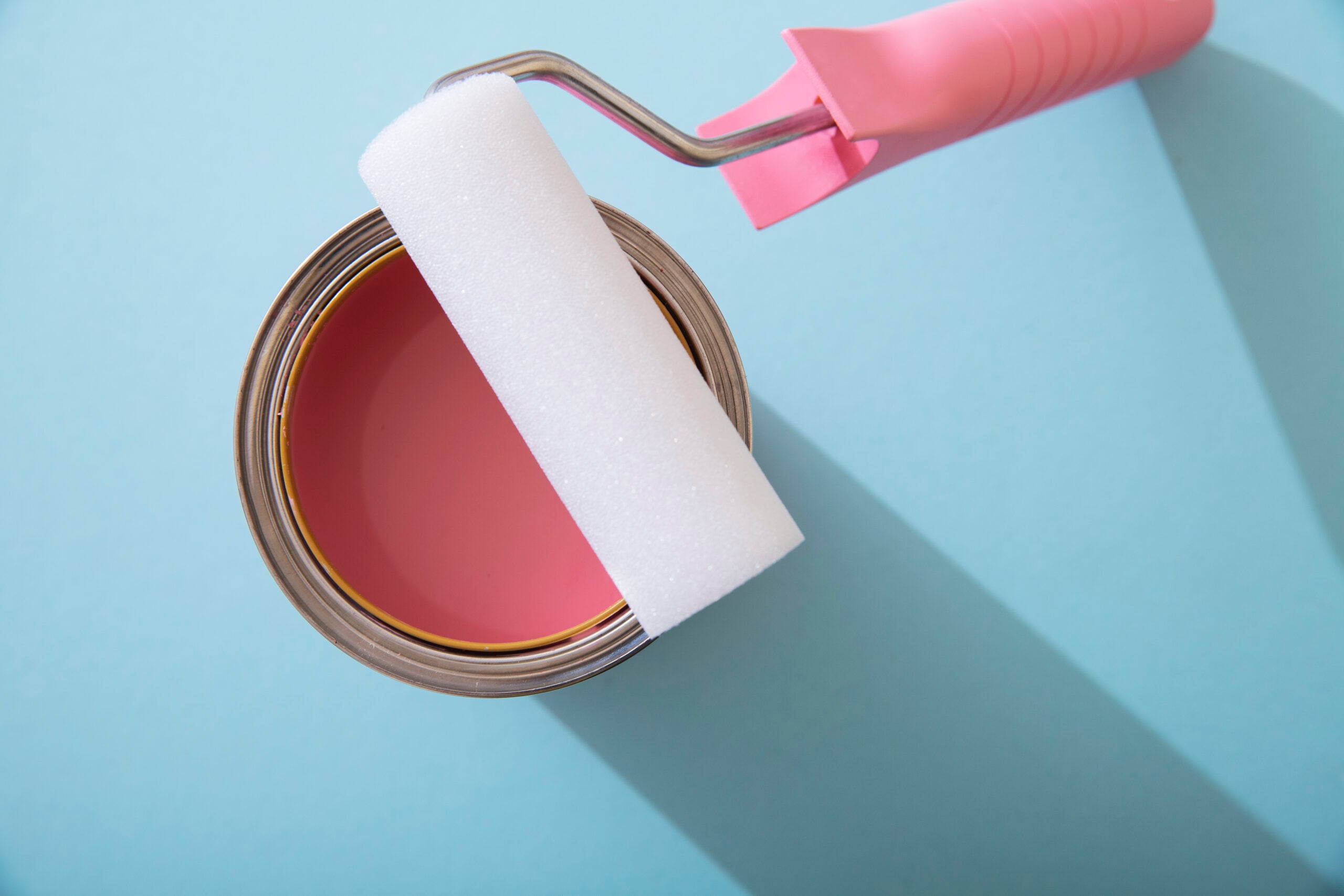
Accurately estimating the amount of paint required for your bedroom project is essential for saving both time and money. Buying too little paint leads to annoying delays and potential color matching issues, especially if you need to purchase a new batch later. Buying too much is simply wasteful.
This guide simplifies the process, helping you calculate your needs based on the typical US-standard one-gallon container.
Key Factors That Affect Paint Quantity
The actual amount of paint you need goes beyond the simple square footage of the room. It’s influenced by the room’s geometry and the characteristics of the wall surface itself.
Room Size and Ceiling Height
The single most critical factor is the total square footage of the walls you plan to cover. You need to calculate the perimeter of the room multiplied by the ceiling height, then subtract the area of any doors and windows.
Simple Calculation Method:
- Measure the Perimeter: Add the length of all four walls (e.g., $10ft + 12ft + 10ft + 12ft = 44ft).
- Measure the Height: Measure the distance from the floor to the ceiling (e.g., 8ft).
- Calculate Total Wall Area: Multiply the perimeter by the height (44ft x 8ft = 352 sq. ft.).
- Subtract Non-Paintable Areas: Estimate 20 sq. ft. for a standard door and $15 sq. ft. for a window. Subtract these areas from the total (352 sq. ft. – 35 sq. ft. = 317 sq. ft. of paintable area).
- Factor in Coats: Since you generally need two coats, multiply the paintable area by two (317 sq. ft. x 2 = 634 sq. ft. of total coverage needed).
Number of Coats and Wall Texture
Paint volume is directly related to the number of times you plan to roll or brush the surface. Most professional jobs require two full coats for uniform color and finish.
- Coats: Always assume two coats. If you are changing a very dark color to a very light color, you might need a third coat or a tinted primer.
- Surface Texture: Highly textured surfaces (like heavy knockdown or popcorn) are porous and require significantly more paint. The peaks and valleys of the texture mean you need more volume to achieve uniform coverage. For heavily textured walls, increase your total estimated paint quantity by 15% to 25%.
General Paint Coverage Guidelines
Understanding the standard coverage rate of a gallon of paint is the benchmark for your estimation.
One Gallon Covers About 350–400 sq. ft.
In the United States, premium interior paint is generally manufactured to cover approximately 350 to 400 square feet per one-gallon container, applied in a single coat, assuming the walls are smooth and pre-primed.
Variables Affecting Coverage:
| Factor | Effect on Coverage |
| Paint Quality | Cheaper paints often have lower quality pigments and binders, requiring more coats. |
| Application Method | Spraying uses more paint than rolling or brushing because of overspray loss. |
| Color Change | Covering a highly contrasting color (e.g., red over white) reduces coverage effectiveness. |
| Gloss Level | High-gloss paints tend to spread less per gallon than matte or flat finishes. |
Plan for Extra Paint for Touch-Ups
It is always prudent to purchase slightly more paint than your calculated minimum, typically keeping about one quart or 10% of the total volume leftover.
Why the Extra Paint Matters:
- Future Repairs: Scuffs, nicks, or marks happen, especially in active bedrooms or children’s rooms. Having paint from the original batch is crucial, as paint mixed days, months, or years apart can show slight variations in color, even if it’s the exact same formula.
- Miscalculation Cushion: It provides a safety net if your walls are unexpectedly absorbent or the room’s square footage was slightly underestimated.
Estimating for Different Bedroom Sizes
Below are general guidelines for standard 8-high ceilings, factoring in two coats for a smooth, prepared surface. These are approximations—always perform the full calculation above for accuracy.
Small Bedroom – 1 Gallon
This estimate covers rooms approximately 10ft x 10ft (or 100 sq. ft. floor area).
- Total Wall Area (2 Coats): Approx. 500 sq. ft. of coverage needed (after subtracting doors/windows).
- The Math: One gallon (350 to 400 sq. ft. per coat) can typically cover the walls of a small room with two full coats, often with a little leftover.
Medium Bedroom – 2 Gallons
This covers common standard bedrooms, approximately 2ft X 15ft (or 180 sq. ft. floor area).
- Total Wall Area (2 Coats): Approx. 880 sq. ft. of coverage needed.
- The Math: Two gallons provide 700 to 800 sq. ft. of coverage. For a room this size, two gallons will be sufficient for two coats, but you may need a third quart to ensure you have enough for minor touch-ups. Buying two gallons is the safest minimum.
Large Master Bedroom – 3–4 Gallons
This range is suitable for larger primary suites, such as those measuring 15ft X 20ft, especially if they feature high ceilings (9ft or higher).
- Total Wall Area (2 Coats): Can easily exceed 1,200 sq. ft. of coverage needed.
- The Math: Three gallons (1,050 to 1,200 sq. ft. coverage) are usually sufficient, but if you have a very tall room, highly textured walls, or plan to paint the ceiling as well, planning for a fourth gallon is the safest route to avoid a trip back to the store mid-job.
Maple Crest Painting Pro Tips
We leverage decades of experience to ensure we never run out of paint on the job and deliver a uniform, perfect finish.
Always Buy a Little Extra for Future Maintenance
Our firm practice is to calculate the precise amount needed and then purchase a 10% surplus, or at least one extra quart, of the final color. We label and leave this excess paint with the client. This serves as your personal, perfectly matched repair kit for years to come. Do not discard this leftover paint!
Primer Can Reduce Total Paint Usage
Primer is a foundational coat designed to seal the surface, neutralize the existing color, and give the topcoat a uniform base to adhere to.
- Sealing: Primer is essential for new drywall or very porous surfaces, where it prevents the topcoat from being soaked up unevenly.
- Color Blocking: If you are transitioning from a dramatic color (like a dark red or deep blue) to a light color (like an off-white), applying a gray-tinted primer first dramatically reduces the number of expensive topcoats needed. Primer is cheaper than paint and significantly improves the finish quality.
FAQs
How many coats of paint are ideal for bedrooms?
The industry standard and best practice is two coats.
- The first coat provides base coverage and adhesion.
- The second coat ensures full color saturation, hides minor streaks or holidays (missed spots) from the first coat, and delivers the rich, uniform finish you selected.
Does color choice affect how much paint you need?
Yes, absolutely. Certain colors have inherent properties that affect coverage:
- Reds, Oranges, and Yellows: These vibrant colors often have low-hiding pigments and frequently require three coats, or a specific tinted primer base, to achieve full, non-streaky saturation, especially when covering a white or neutral wall.
- Dark Colors Over Light: Transitioning from a light wall to a deep color (like navy or black) often requires two or three coats to look perfectly even and dark. Using a dark gray or black-tinted primer first can save you the cost of an extra topcoat gallon.
Don’t let guesswork determine the quality and cost of your project. Let the experts handle the measuring, calculating, and flawless application.
Click here to contact Maple Crest Painting for a precise, hassle-free estimate and a guaranteed perfect finish for your bedroom!