
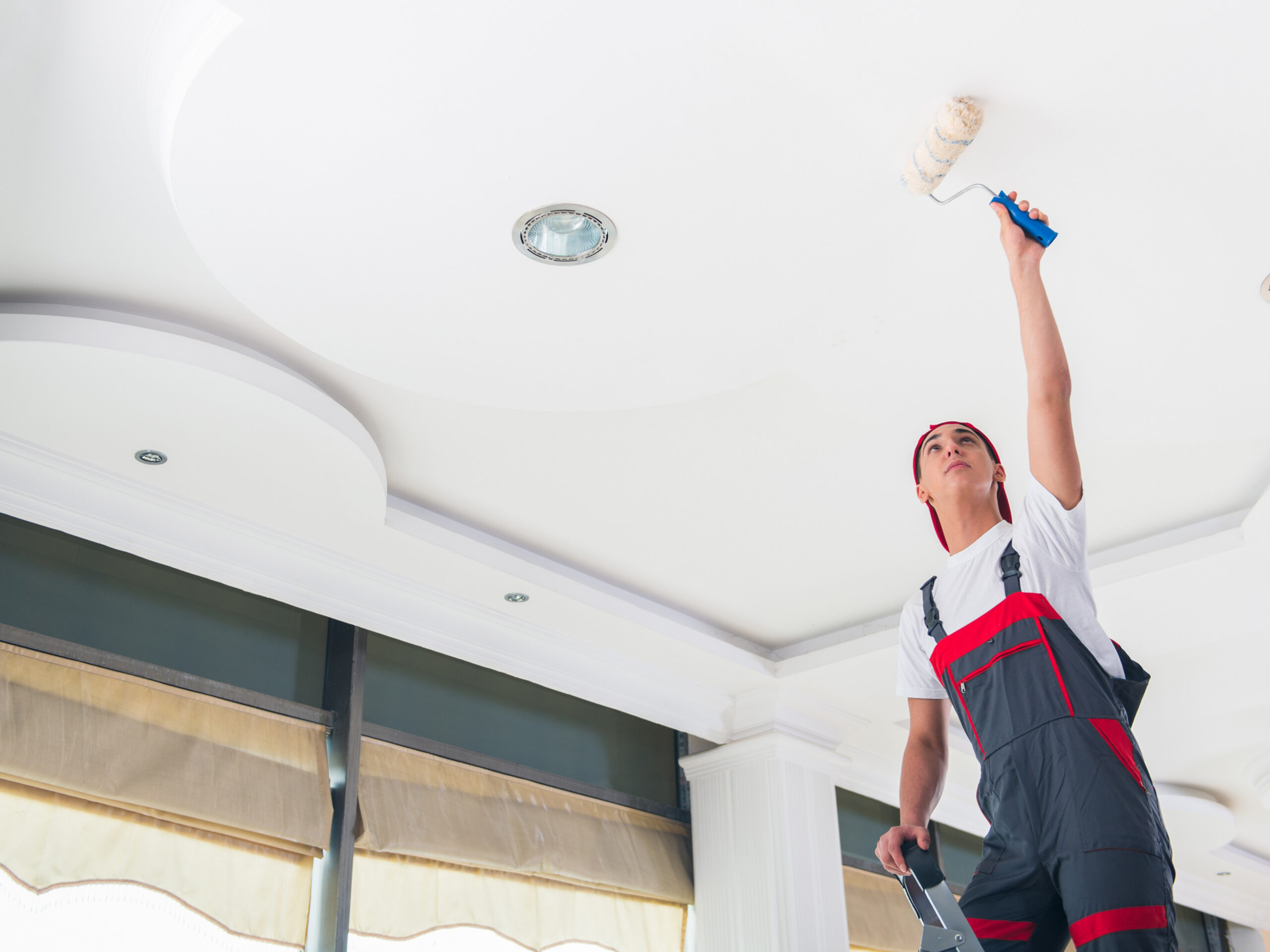
Popcorn ceilings, officially known as acoustic ceilings, were popular for decades for their ability to hide imperfections and reduce noise. While many homeowners choose to scrape them off, painting a popcorn ceiling is a necessary and more cost-effective task when the texture is yellowed, stained, or simply needs a fresh look. However, painting this highly textured surface requires careful preparation and technique to ensure the material stays intact and the coverage is complete.
Maple Crest Painting specializes in difficult surfaces, and we have mastered the art of painting popcorn ceilings without damaging the texture.
What to Know Before You Start
Preparation is the most critical stage of this project. Skipping these initial steps can lead to severe issues like paint failure, peeling, or hazardous exposure.
Check for Asbestos in Older Homes
If your home was built before the 1980s, the popcorn texture may contain asbestos. Disturbing or scraping this material can release harmful fibers into the air, creating a serious health risk.
- Testing is Mandatory: Before doing any scraping, sanding, or heavy manipulation of the ceiling, it is crucial to hire a certified testing service to take a sample.
- If Positive: If asbestos is confirmed, the ceiling must either be professionally removed by an abatement team or encapsulated (sealed) by painting it. Do not scrape it yourself.
Clean Dust and Cobwebs from Textured Surfaces
Popcorn texture is a magnet for dust, cobwebs, and kitchen grease. If you paint over this debris, the paint will not adhere properly, leading to flaking or a splotchy finish.
- Cleaning Method: Use a clean, dry, soft-bristle brush (like a new, soft push broom or a microfiber duster on an extension pole) to gently sweep the surface.
- Avoid Water: Do not use wet rags or sponges, as the moisture can soften the older texture and cause it to come off the ceiling entirely.
Tools and Materials You’ll Need
The right tools are essential to ensure the paint reaches the thousands of peaks and valleys of the popcorn texture.
Thick-Nap Rollers or Airless Sprayers
The most effective way to cover a highly textured surface is by using equipment designed to push paint deep into the crevices.
- Rollers (The Manual Method): You will need a roller cover with a minimum 1.25-inch nap, but ideally a 1.5-inch or 1.75-inch nap. The thick fibers of the nap will hold enough paint to penetrate the texture without you having to press too hard.
- Airless Sprayers (The Professional Method): An airless sprayer is the fastest and most effective way to ensure 100% coverage without disturbing the texture. If you are comfortable renting and using this equipment, it is the superior choice for popcorn ceilings.
Drop Cloths, Ladders, and Protective Gear
Painting a popcorn ceiling is notoriously messy because the texture is so abrasive and the ceiling height requires you to work overhead.
- Protection: You must use high-quality plastic sheeting and painter’s tape to completely cover the walls, windows, and floors. Because paint will splatter heavily, wear goggles, a hat, and old clothing.
- Ladders: Use a sturdy ladder or scaffolding to ensure you can reach the entire ceiling comfortably without overstretching, which can lead to uneven pressure and poor application.
Step-by-Step Painting Process
Follow these steps precisely to guarantee a smooth application and professional result.
Step 1 – Prime the Surface to Seal Texture
Priming is absolutely non-negotiable for an unpainted or heavily stained popcorn ceiling.
- Why Prime? If the original popcorn texture was applied without primer (which is common), it will absorb the moisture from your new paint, causing the texture to soften and sag or even peel off in sheets. Primer seals the texture, preventing this moisture absorption.
- Application: Use a specialized oil-based or high-quality bonding latex primer. Apply it gently with your thick-nap roller, ensuring even coverage without over-saturating the surface.
Step 2 – Apply Even, Gentle Strokes to Avoid Peeling
The physical technique you use is crucial. Too much pressure will scrape off the texture; too many strokes will cause the texture to peel.
- The Gentle Touch: Load your thick-nap roller heavily with paint. Apply the paint in a slow, steady motion across the ceiling, using only very light pressure. Let the roller’s nap do the work of transferring the paint into the crevices.
- Minimize Backrolling: Try to roll over a section only once or twice. If you notice a spot that needs coverage, resist the urge to immediately roll back over it, as the paint will still be wet and can cause the underlying texture to lift. Wait until the coat is completely dry.
Step 3 – Let it Dry Completely Between Coats
Patience is key for a textured ceiling. Allowing adequate drying time ensures the paint film hardens before you apply the next layer.
- Drying vs. Curing: Wait for the time specified on the paint can for re-coating (usually 4 to 6 hours). Do not rush this step. If the first coat is still soft, the heavy nap of the roller will tear it during the second application.
- Coverage: Because the texture casts shadows, a popcorn ceiling often requires two full coats of finish paint to look uniform.
Maple Crest Painting Tips
These professional techniques will ensure your project goes smoothly and the finished ceiling looks its best.
Avoid Over-Saturating the Ceiling
The single biggest mistake is applying too much paint at once, hoping to complete the job in a single coat.
- The Danger: Too much liquid saturation causes the heavy, wet paint to soften the drywall compound beneath the popcorn texture, making the texture material detach from the ceiling.
- Go Light: Always use two light coats rather than one heavy, sagging coat. If applying by sprayer, keep the spray pattern moving quickly and deliberately.
Use Flat or Matte Finishes for Best Coverage
While higher sheens (like satin) are better for cleanability, a lower sheen is superior for hiding the visual inconsistencies inherent in textured ceilings.
- Hiding Imperfections: Flat and matte paints absorb light, which minimizes shadows cast by the popcorn texture. This makes the surface appear more uniform and hides any slight variations in application or texture quality.
- Our Recommendation: Use a high-quality, dedicated ceiling paint in a flat or ultra-matte finish that includes the mildew-resistant properties necessary for a clean home environment.
FAQs
Can I paint a popcorn ceiling without scraping it?
Yes, absolutely. Painting is the preferred method if you are not prepared for the significant mess and labor required for scraping, or if the ceiling contains asbestos. If the ceiling is in good condition (not already peeling or flaking), painting over it is a reliable way to refresh the appearance.
What type of roller works best for textured ceilings?
The best roller is a high-quality, thick-nap roller, typically 1.5 inches to 1.75 inches.
You need a roller that holds a lot of paint and has long fibers to push the paint into the deep texture crevices. Avoid cheap foam rollers or standard wall rollers (3/8-inch or 1/2-inch nap), as they will just skim the surface, requiring you to apply excessive pressure that will tear the texture.
Tackling a textured ceiling requires precision, not brute force. Let the experts handle this challenging job with our specialized equipment and proven techniques.
Ready for a smooth, clean finish on your popcorn ceiling? Contact Maple Crest Painting today for a professional, no-mess estimate!